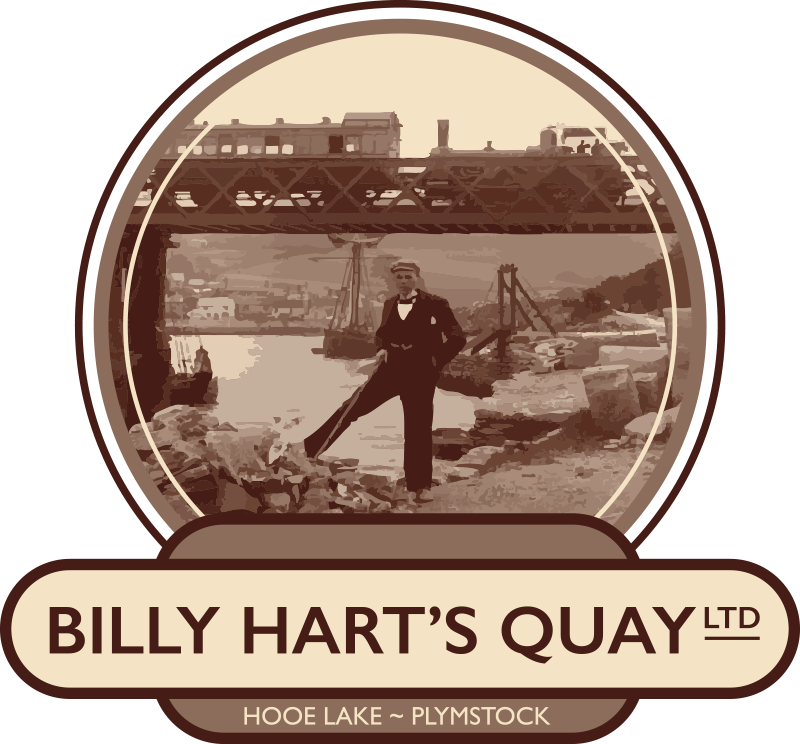


Billy Hart’s Quay, nestled by Hooe Lake in Plymouth, took shape in the 1800s as a working quay tied to local quarrying operations. Named after Billy Hart, a notable manager of one of the prominent limestone quarries in the area, the quay became a hub for shipping out locally quarried stone. Much of this limestone was crucial in the construction of the Plymouth Breakwater, an important 19th-century project that helped protect Plymouth Sound and its harbours. The quarrying and the quay’s operations were in full swing around the early to mid-1800s, with the breakwater construction kicking off around 1812 and continuing for a few decades. In short, Billy Hart’s Quay played a key role in supplying the stone that ultimately helped shape one of Plymouth’s most significant maritime defences.


The Plymouth Breakwater was one of those big infrastructure projects that really helped shape the city’s maritime identity. Before it was built, the harbour was a lot more vulnerable to storms and rough seas. Once they had that breakwater in place, it turned the Plymouth Sound into a much safer and more reliable harbour. And that, in turn, helped Plymouth grow as a naval and commercial port. So it was definitely a big deal for the city’s development and for its maritime history.

During World War II, Billy Hart’s Quay had a role in the war effort as well. It was used as a slipway and loading area, especially for tanks and military equipment. It had a second life as a place where American forces and other allied troops could load and unload military equipment.


Bringing it back to life…
Bill Hart’s Quay is showing signs of new life, with fresh efforts aimed at opening the space up for the community once again. After years of limited use, the quay’s revival offers the chance to reconnect local residents with a small but meaningful piece of Plymstock’s waterfront heritage. Restoring access, improving the surroundings, and encouraging small-scale recreational use could transform the quay into a welcoming spot for families, walkers, and water-users alike. Its renewed purpose would not only preserve a historic part of the shoreline but also create a shared place that the community can enjoy for generations to come.
